


2-minute read
Be honest – what would be your reaction be to this headline in 2028:
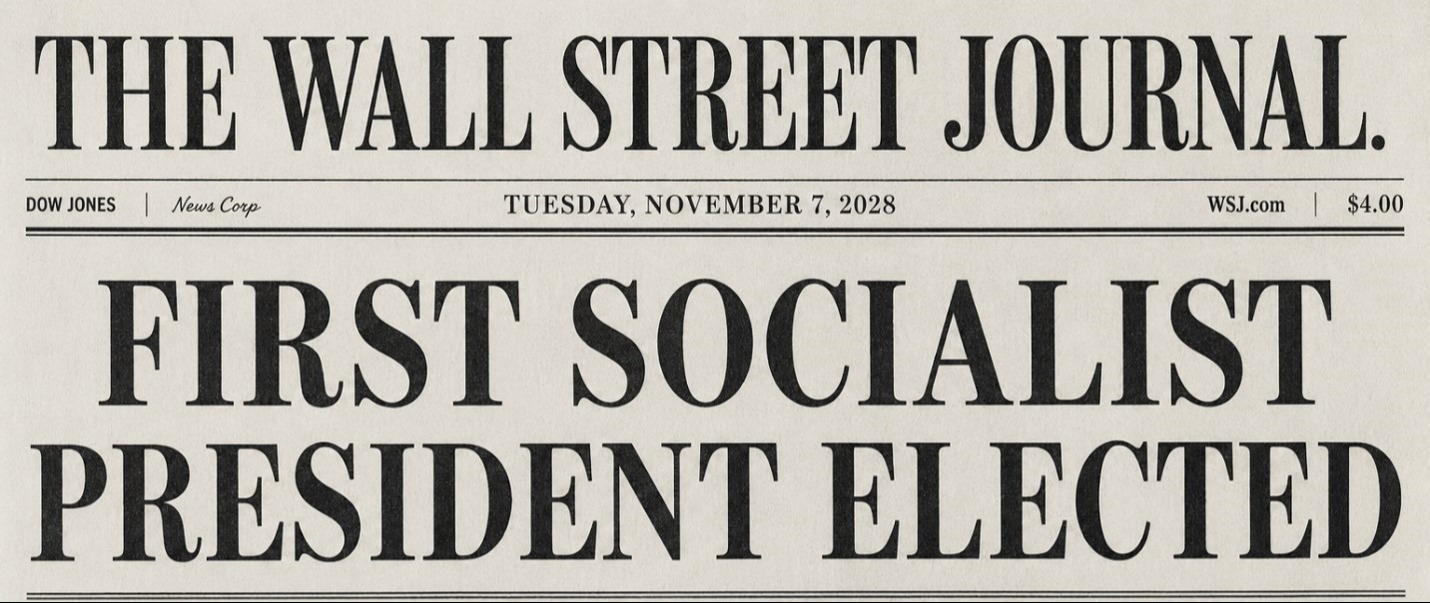
Uhmmm.
I’m guessing some combination of these reactions: “How’s this even possible?.”, “My portfolio is in trouble.”, and “This is going to get interesting.”
I can’t totally dismiss this. Politics – like the market – have a way of surprising us.
People love saying, “That’ll never happen”, until it does.
So why is this a conversation you want to have right now? What do you know that the rest of us don’t?
Because there’s a growing sense—especially among younger people—that the system isn’t working the way they expected.
But don’t young people always whine?
What seems different now is what their specific complaints are: homeownership is harder, college is more expensive, and healthcare is altogether screwed up. In other words, the basics feel not so basic.
You forgot their most recent complaint: AI is going to take my job![1]
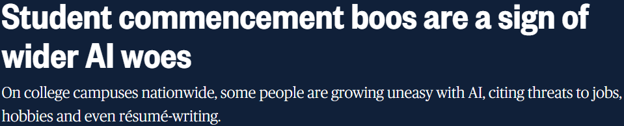
Right! You throw all of these things at people and they may be asking themselves, ‘Where do I fit in all of this?”
What would a socialist platform actually look like?
Based on rhetoric from current socialists in Congress it would likely look like this:
Issue | Policy Focus |
Housing | Expanded affordable housing programs, rent controls, first-time buyer assistance, restrictions on institutional ownership |
Education | Student debt relief, discounted/free college tuition |
Healthcare | Increased government involvement or expanded public coverage |
Taxation | Higher marginal tax rates on high earners, increased taxes on capital gains and estates, wealth taxes |
The policies are one thing. What would happen to the stock market is another.
Are you insinuating it would collapse?
How would it not?
Look, I find it hard to believe that the market would be celebrating. That’s not a political opinion but rather an acknowledgement of how emotional investors can be.
Millions of investors would be thinking the worst.
I agree. And it would be my job to remind them that stocks are largely apolitical. They don’t vote. They react to economic growth, corporate earnings, interest rates, etc.
You’re telling me everything would be hunky dory? I don’t know, man…
I said you could see an initial correction! What I push back on are the people who would be selling every stock they own the day after the election.
What would you tell those people?
I’d tell them not to confuse change with collapse. History has taught us that investors tend to overestimate the impact of elections and underestimate the adaptability of businesses. Doubt corporate America at your own peril.
What should these people focus on instead of who they see as Public Enemy #1 running the country?
Two things: (1) Does your plan still make sense? (2) Can you avoid reacting emotionally to uncertainty? Because at the end of the day the biggest risk to your portfolio isn’t policy. It’s how you respond to it.[2]