


I stumbled across these the other day and it was like rediscovering sugar.

Did that American Eagle t-shirt still fit?
The early-2000s nostalgia was real. Gushers were a lunchroom mainstay.
They certainly were. Though I have no idea what a “gusher” is. What the hell is in those things?
God only knows. You probably don’t find the ingredients on the food pyramid, though.
So, did you bring me here to chat “fruit snacks” or is there something else on your mind?
Well, gushers reminded me of something. A historical day in the market.
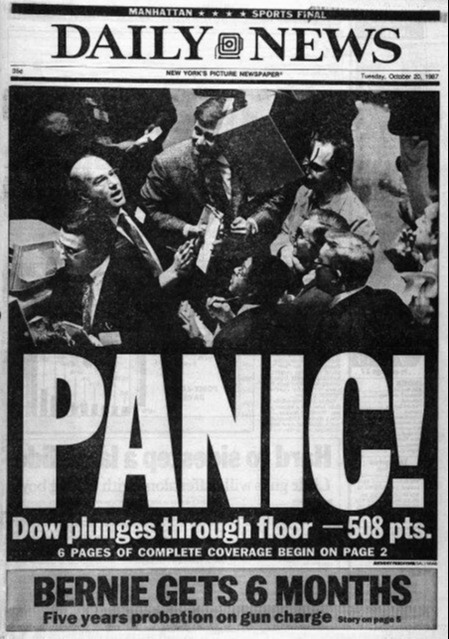
Bear with me for a sec. This headline is from Black Monday, one of the worst days in the market ever. My dad was lucky enough to start as a stockbroker two weeks before this bloodbath.
The Dow lost 508 points.
That’s why we need to get a grasp on the mainstream stock indices.
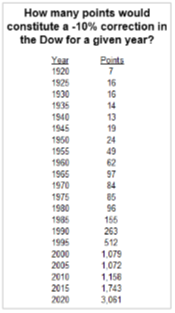
A bold, “DOW TUMBLES 500 POINTS, headline will catch more eyeballs than, “THE DOW LOST 1.25%”. I get it, but we need to start thinking in terms of percentage points.
You realize that’ll never happen? At least not for somebody over the age of 50.
You’re absolutely right. So, if that’s the case, then we need to at the very least understand these stock indices better. When the Dow falls 500 points, people should know what that means.
What does it mean?
The Dow Jones Industrial Average is comprised of 30 stocks. They’re almost all recognizable companies ranging from Johnson & Johnson to Disney. It was developed in 1896 so it’s the oldest mainstream index and, therefore, the most popular among baby boomer investors.
Just 30 stocks, eh? Is that really a fair representation of the overall stock market?
I would argue not really. Hence why other indices have been created to act as broader indicators. Take the S&P 500, for example. This index holds more than 16x the number of stocks when compared to the Dow (505 to be exact).
Is it similar to the Dow as far as the types of stocks?
The makeup of the Dow and S&P definitely differ. For example, a quarter of the S&P is comprised of stocks from the tech sector while only around one-sixth of the Dow is tech-related. Meanwhile, the Dow has almost double the exposure to industrials as does the S&P.
And then there’s the Nasdaq?
Yep. This index is made up of over 2,000 stocks. The Nasdaq is often spoken in the same breath as the tech sector since over 40% of the index is comprised of tech companies. Unlike the Dow, it holds very little industrial names (4%).
Any other indices worth mentioning?
There are some that track international stocks (MSCI, EAFE) and others for small company stocks (Russell 2000). You may hear about them if they are dragging your portfolio down, but they aren’t mentioned frequently.
So, what should we pay attention to? It appears there are a lot.
Seems like more brain power than I am willing to use.
I’m not advising people do complex calculations while they’re watching CNBC. What I would tell people is this: don’t read a headline and think, “That’s exactly what happened to my portfolio today.” Because it’s likely far more nuanced than that.
Just My Afterthoughts
Without being overly technical, keep in mind that the Dow is calculated differently than the S&P or Nasdaq. The Dow is a price-weighted index. The value of the index is the sum of the stock prices included in the index, divided by a factor which is updated for stock splits. The S&P and Nasdaq are market-cap weighted, meaning the more valuable companies affect the index more significantly. This is currently why the large tech companies (e.g. Apple, Microsoft, Google) have an outsized influence on the performance of the S&P. It all comes down to what drives “the market” and what market you’re referring to.